
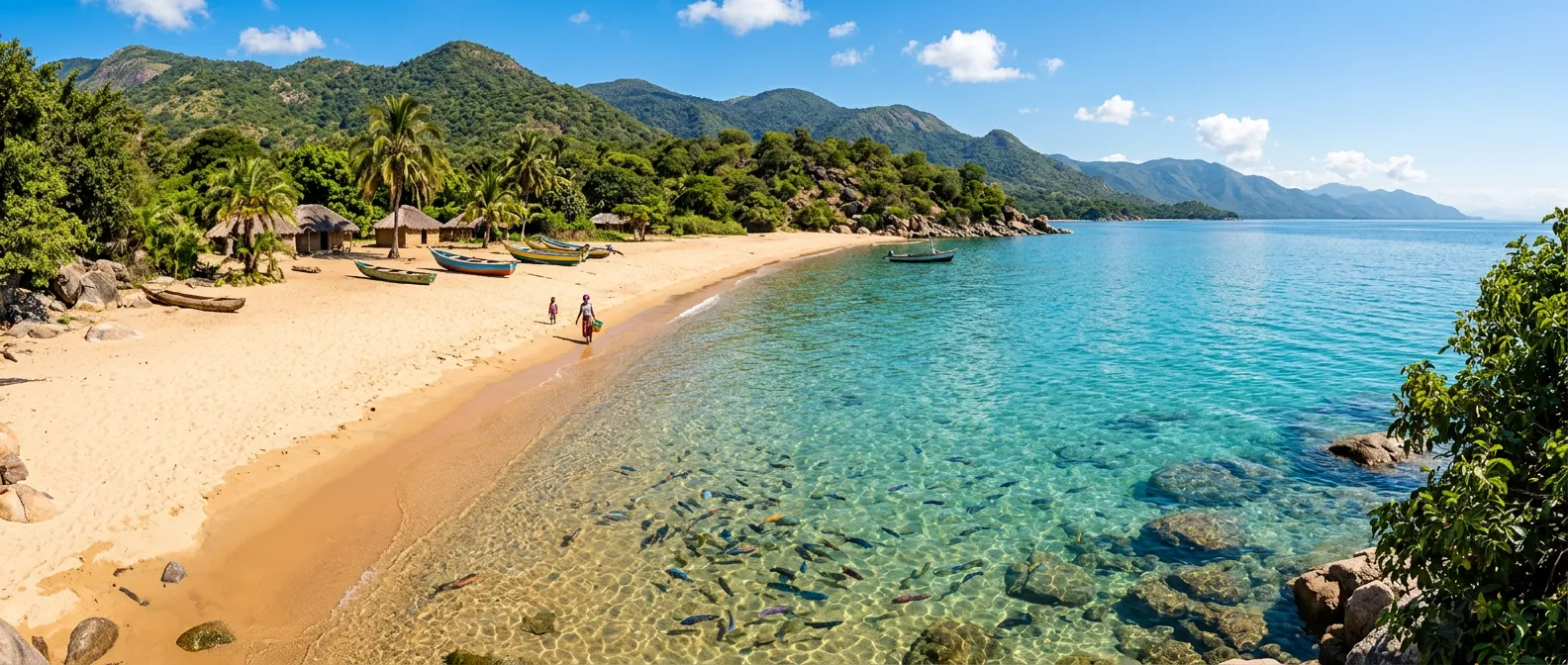
Traveling to Malawi requires a valid passport with at least six months of validity, and most visitors need a visa – either obtained online via eVisa before departure or on arrival at designated ports of entry. Known as the “Warm Heart of Africa,” Malawi offers stunning lake scenery, diverse wildlife, and welcoming people. This guide covers everything first-time visitors need to know before their trip.
Why Visit Malawi?
Malawi is one of Africa’s most underrated travel destinations. The country sits in southeastern Africa, bordered by Mozambique, Zambia, and Tanzania. Lake Malawi – Africa’s third-largest lake – dominates the eastern landscape and draws visitors with its crystal-clear waters, sandy beaches, and freshwater fish found nowhere else on earth.
Beyond the lake, Liwonde National Park offers excellent safari experiences with elephants, hippos, and crocodiles. The Mulanje Massif provides challenging hiking with spectacular views, while the Zomba Plateau features forests, waterfalls, and panoramic lookouts. Unlike some neighboring countries, Malawi remains affordable and relatively uncrowded.
Visa Requirements for Malawi
Before planning your itinerary, confirm whether you need a visa. Malawi operates a reciprocity-based visa system introduced in December 2025 with two categories:
- Category One countries: Must obtain a visa before departure via the eVisa portal. Visa on arrival is not available.
- Category Two countries: Can obtain a visa on arrival at ports of entry, though applying for an eVisa in advance is recommended.
Over 40 countries enjoy visa-free entry for up to 90 days, including all SADC member states (South Africa, Tanzania, Zambia, Zimbabwe, Mozambique) and select COMESA members (Kenya, Rwanda, Uganda). Check the full list of visa-free countries for Malawi to see if you qualify.
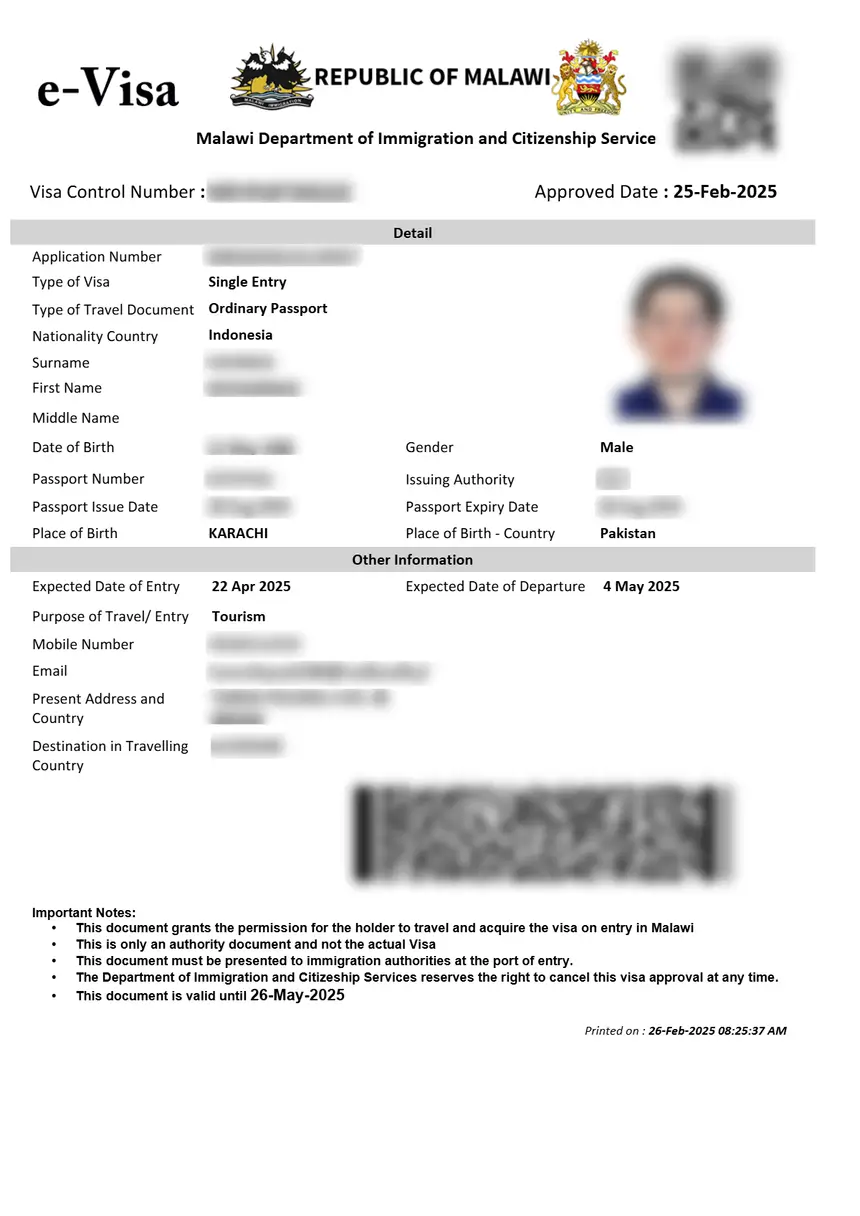
For those who need a visa, the Malawi eVisa guide walks through the complete online application process. Tourist visas cost $75 for single entry (up to 90 days), while a transit visa is $50. See the full Malawi visa fees breakdown for all categories.
Passport and Document Checklist
| Document | Requirement |
|---|---|
| Passport validity | At least 6 months from arrival date |
| Blank pages | At least 1 blank page for entry stamp |
| Visa | eVisa, visa on arrival, or visa-free (depending on nationality) |
| Yellow fever certificate | Required if arriving from or transiting through an endemic country |
| Return/onward ticket | May be requested at immigration |
| Proof of accommodation | Hotel booking or host’s address |
| Travel insurance | Strongly recommended |
Scanned copies of documents are required for the eVisa application – photographs of documents taken with a phone camera are not accepted.
Getting to Malawi
Kamuzu International Airport (LLW) in Lilongwe is the main international gateway. Chileka International Airport (BLZ) in Blantyre handles some regional flights. Major airlines serving Malawi include:
| Airline | Routes |
|---|---|
| Ethiopian Airlines | Addis Ababa to Lilongwe/Blantyre |
| Kenya Airways | Nairobi to Lilongwe |
| South African Airways | Johannesburg to Lilongwe/Blantyre |
| Airlink | Johannesburg to Lilongwe/Blantyre |
| Proflight Zambia | Lusaka to Lilongwe |
Direct flights from Europe or the Americas are not available – most travelers connect through Addis Ababa, Nairobi, or Johannesburg. Book flights well in advance during peak season (June to September).
Best Time to Visit Malawi
| Season | Months | Weather | Best For |
|---|---|---|---|
| Dry/cool | May to August | 15-25°C, clear skies | Safari, hiking, comfortable travel |
| Dry/hot | September to October | 25-35°C, very hot | Lake activities, wildlife viewing |
| Wet/rainy | November to April | 20-30°C, heavy rains | Lush scenery, fewer tourists |
The dry season from May to October is the most popular time to visit. Roads are accessible, wildlife concentrates near water sources, and temperatures are comfortable. The rainy season brings flooding risks that can disrupt travel plans, particularly in remote areas.
Getting Around Malawi
Transport within Malawi varies in reliability. The main routes between Lilongwe, Blantyre, and Zomba are paved and generally in good condition. Secondary roads may be unpaved and challenging during the rainy season.
| Transport Type | Cost (approximate) | Notes |
|---|---|---|
| Domestic flights | $100-200 one way | Limited routes, operates between Lilongwe and Blantyre |
| Minibus (matola) | $1-5 per trip | Affordable but crowded; main public transport |
| Private taxi | $20-50 per trip | Negotiate price before departure |
| Car rental | $50-100/day | Requires international driving permit; 4WD recommended |
| Coach bus | $10-20 between cities | Reliable on main routes (e.g., Lilongwe-Blantyre) |
Money and Currency
The Malawian Kwacha (MWK) is the local currency. US dollars are widely accepted at hotels, tour operators, and national parks. ATMs are available in major cities but may have withdrawal limits and can be unreliable. Carry enough cash for rural areas where card payments are not accepted.
| Currency | Approximate Rate |
|---|---|
| 1 USD | ~1,700-1,800 MWK |
| 1 EUR | ~1,850-1,950 MWK |
| 1 GBP | ~2,150-2,250 MWK |
Exchange rates fluctuate – check current rates before traveling. Bureau de change offices in Lilongwe and Blantyre typically offer better rates than airport exchanges.
Health and Safety
Several health precautions are essential when traveling to Malawi:
- Malaria: Present throughout the country. Take antimalarial medication and use insect repellent with DEET, especially at dusk and dawn.
- Yellow fever vaccination: Required if arriving from an endemic country. Carry your certificate.
- Routine vaccinations: Ensure hepatitis A, hepatitis B, typhoid, and tetanus vaccines are up to date.
- Water safety: Drink bottled or purified water. Avoid ice in drinks at informal establishments.
- Traveler Health Check form: Complete the health screening form at poe.health.gov.mw/self-screen before arrival.
Malawi is generally safe for tourists, but take standard precautions: avoid walking alone at night, keep valuables secure, and use hotel safes when available.
Top Destinations in Malawi
| Destination | Highlights | Recommended Days |
|---|---|---|
| Lake Malawi (Cape Maclear/Nkhata Bay) | Snorkeling, diving, kayaking, beach relaxation | 3-5 days |
| Liwonde National Park | Safari drives, boat safaris, elephants, hippos | 2-3 days |
| Mulanje Massif | Mountain hiking, tea estates, waterfalls | 2-4 days |
| Zomba Plateau | Forest walks, trout fishing, panoramic views | 1-2 days |
| Lilongwe | Capital city, wildlife center, markets | 1-2 days |
| Livingstonia | Historical mission, mushroom rock, lake views | 2-3 days |
Accommodation Options
Malawi offers accommodation for every budget. In Lilongwe and Blantyre, international-standard hotels and guesthouses are readily available. Along Lake Malawi, options range from luxury lodges to backpacker hostels. In national parks, safari camps provide mid-range to high-end experiences.
Budget travelers can find guesthouses for $15-30 per night in cities. Mid-range hotels run $50-100, while luxury lodges on Lake Malawi or in national parks charge $150-400 per night. Book in advance during peak season (June to September).
Practical Tips for First-Time Visitors
- Language: English is the official language and widely spoken in cities. Chichewa is the most common local language.
- Time zone: Central Africa Time (CAT), UTC+2. No daylight saving time.
- Electricity: 230V, type G plugs (same as the UK). Power cuts are common; carry a power bank.
- SIM cards: Airtel and TNM are the main providers. SIM cards are inexpensive and data is affordable.
- Tipping: 10% at restaurants is customary. Tip guides and drivers at your discretion.
- Photography: Ask permission before photographing people. Avoid photographing government buildings or military installations.
FAQs About Traveling to Malawi
Do I need a visa to travel to Malawi?
It depends on your nationality. Over 40 countries are visa-free for up to 90 days. Others need either an eVisa (applied online before travel) or can get a visa on arrival. Check the Malawi visa policy for your specific situation.
Is Malawi safe for tourists?
Yes, Malawi is considered one of the safest countries in Africa for travelers. Violent crime against tourists is rare. Use common sense precautions like avoiding isolated areas at night and keeping valuables secure.
What is the best way to get a Malawi visa?
The eVisa is the most convenient option. Apply at evisa.gov.mw at least two weeks before travel. Processing takes a minimum of four business days. If you are from a Category Two country, you can also get a visa on arrival at the airport, but the eVisa avoids potential queues.
How much money do I need per day in Malawi?
Budget travelers can manage on $30-50 per day including accommodation, meals, and local transport. Mid-range travelers should plan for $80-150 per day. Luxury travelers visiting national parks and lakeside lodges may spend $200-400 daily.
Do I need any vaccinations for Malawi?
A yellow fever certificate is required if you are arriving from or transiting through a yellow fever endemic country. Malaria prophylaxis is strongly recommended. Ensure routine vaccinations (hepatitis A and B, typhoid, tetanus) are current.
What is the best time of year to visit Malawi?
The dry season from May to October is ideal for most visitors. Wildlife viewing peaks in September and October when animals gather near water sources. The rainy season (November to April) brings lush scenery but can make rural roads impassable.
Can I use US dollars in Malawi?
US dollars are accepted at most hotels, tour operators, and national parks. However, the local currency (Malawian Kwacha) is needed for everyday purchases at markets, shops, and local restaurants. Carry both currencies.
Is Lake Malawi safe for swimming?
Yes, Lake Malawi is generally safe for swimming, especially at popular beaches like Cape Maclear and Nkhata Bay. The lake has no crocodiles or hippos in most tourist areas, but always check locally. Bilharzia (schistosiasis) is present in some areas – avoid stagnant water and consult your doctor about precautions.